Thursday, February 20, 2020

WiSE Professionals resumes with Co-Creating Indigenous Futures, March 4, 4pm


Co-Creating Indigenous Futures: Finding My Place as a Haudenosaunee Woman in Academia, Land Sovereignty, and Healing Justice, March 4, 4pm, Gateway Event Center

Abstract: Stephanie Morningstar, Oneida (Turtle Clan), discusses the evolution of her work as a student, activist, earth-worker, herbalist, and Indigenous Knowledge Mobilizer within her community, the academy, and institutions to advance land, food, water, and non-human sovereignty as a step toward decolonization. We will explore the intersections and legacy of settler colonialism through stories of how intergenerational trauma, racialization, and systemic racism compound health disparities; and how land and access to land is directly implicated in the extractive economies and ideologies that have led to the current climate crisis. This brief glimpse into the life of one singular story in a greater constellation of climate activists, front-line land and water defenders, medicine makers, researchers, farmers, healers, and emergent strategists is intended to activate and share a multi-faceted, multi-disciplinary approach to building community-driven, meaningful, equitable solutions and adaptations to our current shared legacy of colonization and how we can collectively heal together toward a radically beautiful future.

Bio: Stephanie Morningstar (OnΛyota'a:ka – Oneida, Turtle clan, Haudenosaunee Confederacy) is an Herbalist, soil and seed steward, scholar, student, and Earth Worker dedicated to decolonizing and liberating minds, hearts, and land- one plant, person, ecosystem, and non-human being at a time. Stephanie grows medicines and food for front line activists and communities of color at Sky World Apothecary & Farm. She serves as a Leadership Council member for the New England Women’s Herbal Conference and the International Herb Symposium where she has collectively worked to decolonize learning spaces for her community. She is the Co-Coordinator of the Northeast Farmers of Color Land Trust where she works to liberate land and resituate Indigenous and Diasporic peoples’ roles, responsibilities, and covenants to the land as a direct response to land dispossession, health disparities, and the ongoing climate crisis. Stephanie is also an Indigenous Knowledge Mobilization Specialist for Global Water Futures, where she helps Indigenous-led projects to advance the understanding of traditional knowledge and western knowledge indicators by working together to research and aid in water governance, food security, sediment restoration, water security, climate change and human and ecosystem health in Indigenous communities. She is in love with a beautiful human named Noel, who she has shared her life with for over 10 years. They currently live on Dish With One Spoon Wampum Agreement territory, also known as Niagara, Ontario. 

This program is cross-listed with the Center for Native Peoples and the Environment.

For more information about the Women in Scientific and Environmental Professions Speaker Series, contact Heather Engelman, engelman@esf.edu or 315-470-4752

Wednesday, February 19, 2020

"The Environmental Implications of Interstate 81: Past, Present and Future Plans for I-81"

ESF's Environmental & Social Justice Lecture Series continues Tuesday, Mar 3, at 11am in ESF's Gateway Center, with "The Environmental Implications of Interstate 81." 
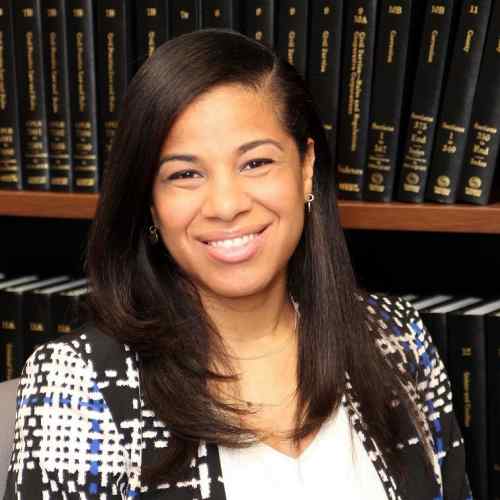
Lanessa Chaplin, Project Counsel for the NY Civil Liberties Union will catch us up on "Past, Present and Future Plans for I-81" and facilitate the discussion.  
Lunch provided
Co-sponsored by the Division of Student Affairs, the President’s Office, the Undergraduate Student Association and the Department of Environmental Studies

Thursday, January 30, 2020

Information on menstrual products in more ESF restrooms


Shared via "CampusNews"
Dear ESF Campus Community,

Over winter break, the Inclusion, Diversity, and Equity Committee worked with the Facilities Department to provide free menstrual products in every restroom on campus. These products have previously been available in women’s restrooms, but have now been placed in men’s and all-gender restrooms as well. A list of locations of women’s, all-gender, single-occupant, and accessible restrooms is available from the ESF Women’s Caucus: https://www.esf.edu/womenscaucus/documents/bathrooms.pdf.

The reasoning behind placing menstrual products in all restrooms is simple: there are people on our campus who find themselves in need of these products, and they should have easy access to them. The Gender Expression Non-Discrimination Act (GENDA) states that all restrooms may be used by any person regardless of gender identity or expression. Women are not the only people who menstruate, and people of all genders should be able to access menstrual health products in any restroom they enter.  The products are in small bins with lids, and can be easily avoided by those who are not in need of them.

One question that has been posed to the Committee is whether these products should be limited to the all-gender restrooms on campus. All-gender restrooms are very limited on campus; some buildings don’t have any, or lack quickly navigable paths to those in other buildings.  Timing access to these products when needed for ¼ of each month can be a challenge.  If any period is extra heavy, or a person also has a mobility challenge or an extra time constrained schedule, the difficulty to reach an all-gender restroom would be far greater. Many folks who menstruate have preferred products and will only be using what’s in the baskets when they don’t have time or funds to get what works best for them. Lacking access to these products can negatively impact access to education and to work.

The IDE Committee is proud to be part of this initiative to promote equitable access to necessary health products for our entire campus community.

For more information on this and other inclusion, diversity, and equity initiatives, please visit www.esf.edu/ide. Additional information and resources regarding GENDA can be found via the New York Transgender Advocacy Group website at https://www.nytag.org/genda. Any questions, concerns, or ideas can be addressed to [revised contact: Heather Engelman, engelman@esf.edu]. 

Best,

Jules Findlay (they/them)
Coordinator of Education Abroad
Office of International Education
SUNY College of Environmental Science and Forestry
9 Old Greenhouse · 1 Forestry Drive · Syracuse, NY 13210

Tuesday, January 14, 2020

Choose action!


Do you know what to do if you see someone threatening a partner?  Are you unsure how to respond when someone tells an inappropriate joke?  6 session workshop for students begins 1/23/2020 at 11 am in 110 Moon.  RSVP: chooseaction@esf.edu Questions: jkeating@esf.eduEver witnessed situations or heard statements that sent up hackles, but weren’t sure what to do or say to intervene or how to get help? The Choose Action Network will be conducting the next Mentors in Violence Prevention (MVP) Training for students over a 6 part workshop beginning NEXT THURSDAY (1/23/2020 during College Hour)! MVP is a renowned “gender violence, sexual harassment and bullying prevention program…[that teaches bystanders how] to challenge … social, cultural and institutional norms that support abusive behavior.”  Participants will have opportunities to practice responses AND gain a cohort of like-minded folks who share their concerns for a safer community.

We strongly encourage students to attend all the sessions.

This session is for students--please contact chooseaction@esf.edu to sign up!  For more information, contact Jennifer Keating at Jkeating@esf.edu.  Faculty and staff—let students know they have your support to participate, and stay tuned for announcement for a separate workshop just for you! 

Thursday, December 5, 2019

Coffee Break rescheduled 12/9, 11am, 408 Baker


Coffee Break, Monday, 12/9, 11am-12:15 or so in 408 Baker, rescheduled in conjunction with Ladies Against Social Stigmas over an extended Diversity 24|7|365!   

Break?!

You might be thinking “I (or my students) don’t have time to lounge during finals week! ”  Of course not!  But short breaks help individuals regroup and gain fresh perspectives, and diversity of thought is beneficial for problem solving.  Networking and group mentoring are recommended to remove power differentials, and makes for some rich discussions.    And don’t forget about the research  that stress responses in women are moderated by social supports (tend and befriend vs fight or flight).  Or that while sexual coercion and unwanted sexual attention may have waned, gender harassment is pervasive (and campuses that let that fly tend to have higher rates of those more egregious issues).  And with racial and religious bias coming out in the local community in recent weeks, a supportive environment is more important than ever.  Not to mention that exam period is just plain stressful; everyone benefits when others root for their success!

So take a break with us; it’s good for you (and business, too).

About the partners:

LASS is an affinity group for underrepresented women students, which along with the forerunner of the Sexuality and Gender Alliance (SAGA) began in 2015, following the successful launch of the Kings Court Mentoring Program. Diversity@ESF 24|7|365 is a weekly or biweekly forum open to faculty, staff and students for concurrent student support and allyship development through facilitated discussions within a “brave space.” It developed in consultation with campus entities following the departure of a staff-level Director of Student Diversity and Inclusion Initiatives. Intended as a “stopgap” until that office re-filled, with support of Baobab Society, CSTEP, Student Affairs, ESF Women’s Caucus, EOP, Graduate Student Association, International Education Office, King’s Court Mentoring Program, Ladies Against Social Stigma (LASS), Office of Inclusion, Diversity, and Equity, Professionals of Color, Sexuality and Gender Alliance (SAGA) and the Undergraduate Student Association (USA). ESF Women’s Caucus may be the first of ESF’s affinity groups, providing support across departments and titles since 1994. It followed on the heels of the the campus' internal and 3rd party assessments of the climate for women students, soon after the successful launch of the Baobab Society.  This student club was founded by students (ca 1991) under the advisement of Admissions Counselor Mrs. Eva Williams, about the same time that the college began actively recruiting domestic students of color, “to ensure the multicultural outreach and enlightenment of the college and Syracuse communities. [It] host several events throughout the academic year to celebrate the many different cultures represented at the SUNY College of Environmental Science & Forestry.”

Saturday, November 9, 2019

Women's Empowerment Brunch


Patricia Cerro-Reehil, Executive Director, NYWEA Johnson opened the WEB with hurdles:  colleagues pushed to be internal counsel rather than client facing, flextime in acknowledgment of families and variable schedules, never feeling old enough to fill managerial roles (vs male counterparts growing beards, appearing more distinuquished and part of the club), that boards aren't reflective of social makeup--in gender or ethnicity.  Ask for what you need.  Be realistic about balance.  Focus of what's important and give it your all.
The panel, comprised of Reehil, Shumaila Bhatti, Janine DeBaise, Alyssa McDanile, Caleb Scib, answered questions posed by facilitator Brittany Wong and the floor about the hurdles they face, and the compounding impacts of the intersection with gender and other aspects of identity.  They defined feminism as equal social and political opportunity for access, security to make choices.  That the definition still needs to be explained means that it hasn't yet been rached.  Need more female perspectives in land planning and more.
They advice young people to get experience by "going above and beyond, but still find time for balance."  Some ignore sexual harassment on jobs because they "needed job.  No one else is complaining" until in "better positions" speak out.  One described ideas being mocked, and being treated as a joke.  Another tried to make complaints but was told they "misunderstood.  It was nothing."  Remaining colleagues pressured HR until an investigation was scheduled, months later.  
Male colleagues, mentors  and classmates can encourage and provide info and resources.  They can also push forward ideas (especially ones that have been ignored) presented by their female colleagues and classmates, panelists noted that transmen might not "present enough as male" to have much power or privilege.  
Those in power can do more to promote intersectionality though community building and acknowledging that there isn't intersectional understanding at this time!  Recognize the need for events like these.  Don't unsee things.  Let people reflect on their experiences, and don't dismiss it.  OK to ask simple questions, but don't start from position of stereotypes.
Require courses in cultural competency and environmental justice.  
For managing conflict, acknowledge the commonalities to move forward.  Also cannot ignore that biases and assumptions exist. 
Key points: Women (and gender non-conforming folks) face a higher penalty for messing up than male/straight peers.  This goes along with tenancy to give those individuals credit for their potential, while women (and gender non-conforming) have to demonstrate their competencies, often at high levels.  Also, women are assumed to speak more than we do.  Cultural competencies are learned, and colleges should provide opportunities through required coursework and trainings, and opportunities like these to listen to each others stories.

Wednesday, October 16, 2019

Coffee/Tea Breaks for Networking/brainstorming/Open Discussion resumes 10/28


Block out Oct 28, Nov 11, and Dec 2, all 12:45-2:15 (pop in, or stay, as your schedule permits).  324 Bray for Oct and Dec dates, 314 for November. 

Discuss issues facing women in your field, role, or intersection with any other identity.   Which populations are on solid footing?  Which need more support?

Some (all?) of you might be thinking “I (or my students) don’t have time to lounge mid-day.”  Of course not!  But short breaks help individuals regroup and gain fresh perspectives, and diversity of thought is beneficial for problem solving.  Networking and group mentoring are recommended to remove power differentials, and makes for some rich discussions.    And don’t forget about the research  that stress responses in women are moderated by social supports (tend and befriend vs fight or flight).  Or that while sexual coercion and unwanted sexual attention may have waned, gender harassment is pervasive (and campuses that let that fly tend to have higher rates of those more egregious issues).

So take a break with us; it’s good for you (and business, too).

2019 Women's Empowerment Brunch announced


The Baobab Society would like to formally invite the campus to the Women's Empowerment Brunch. It is an annual event meant to celebrate women from any background and encourage ally-ship and support from around campus and the community. 

The event will take place on Saturday, November 9th from 11:00am-2:00pm in the Gateway Center. Admission is free and open for all to come, so invite friends and family!  In addition to serving free brunch, we will be hosting a panel and group discussion about women in the workforce, in STEM, and representation across all levels and groups. 

We'd love to have you for this event! If you have any questions, comments, or concerns, please contact thebaobabsociety@gmail.com or Emily Li at eli107@syr.edu and we'd be happy to answer them. 

Friday, June 28, 2019

Record attendance for 2019 Take our Daughters and Sons to Work Day

In lieu of school on April 25, ESF employees and students brought 44 8–11 yr olds from 30 area schools to try their hands at a variety of ESF-fostered careers during the college's 26th annual Take our Kids to Work Day program (AKA Kids' Day).

Over the course of the day, kids built terrariums with Linda McGuigan, Allison Oakes and Hannah Pilkey, who work on the Chestnut Project.  They explored a few chemical reactions on paper prior to activating self-inflating balloons with Chemistry’s Kate Bailie.  They developed storyboards with Sarah Grabman of the new Digital Storytelling Studio.    
Teams, each given the same materials and coached by a member of either Engineering for a Sustainable Society or Engineers without Borders, competed to most effectively remove particulates through Water Filtration (staff support provided by Karen Karker, Instructional Support Specialist, Environmental Resources Engineering).  Following a quick lesson on bird anatomy and habit, EFB graduate students Laine McCall and Ravyn Neville took advantage of the beautiful afternoon and lead a Bird Walk across campus and into Oakwood Cemetary.  Because life is more than work, we also featured an art session!  Kids upcycled materials that Maura Stefl, Office of Experiential Learning and Outreach, waylaid from the wastestreams from campus (curtains and cardboard), homes (fence posts), and a small business (mitten scraps) into a succulent plantscape.  Cool lessons:  art flowers don’t need to look like any that exist in real life!  Take inspiration from the colors and textures of the materials, and add dimension. (Thank you: Mark Poupore for cutting fenceposts to size; Lauren Gibbs, Laura Crandall, Julie Fishman, Brad Fierke, for their help with glue guns.) The day concluded with Heather Engelman, Forest and Natural Resource Management and We All Need Trees, a rapid examination of a number of household products and foods that make use of tree products for strength, flavor, and texture, and some ties to ESF’s programs of study.

After the formal program, kids reunited with their adults and headed to a few Earth Week programs, including perennial favorites Birds of Prey and Tie Dye.

We also thank:  

  • Group Guides Brad Fierke, Julie Fishman, Laura Crandall, Amy McGuigan, Malika Carter, Jackie Whitehead, Lenny Leonard, and Linda McGuigan, with the assistance of Philippe Vidon, Erin Tochelli, Katherina Searing and Sarah Houck. 
  • Lunch team: Mark Bremer, Linda McGuigan, Katherina Searing, Andy Marshall, Josh Arnold, Kathy Lang, Lena Randall.  
  • Photographers: Heather Engelman and Julie Fishman.  
  • Offices that contributed stuff for kids to carry out activities: 
    • ALUMNI RELATIONS and the ESF CAMPUS BOOKSTORE, pencils and magnets; Communications, sunglasses; 
    • SU BOOKSTORE, pencils; 
    • PROVOST’s OFFICE and ESF WOMEN’S CAUCUS, lunch, snacks, color printing, notebooks, some terrarium supplies; 
    •  CHESTNUT PROJECT, plants, potting media, distilled water, and other components for the terrariums; 
    •  PHYSICAL PLANT and MORRISVILLE AUXILLIARY SERVICES, set & clean up;
    • COPY CENTER, B/W printing.    
  • Office of Research Programs, Janice O'Mara, and Tom LeRoy for their assistance with program compliance with SUNY’s Child Protection Policy

For more photos, please visit our album.

Thursday, June 13, 2019

Sexual Harassment can cost NAS membership


The National Academy of Sciences now has a way to expel harassers, as well as perpetrators of scientific misconduct, reported Megan Theilking of Statnews  “Under the new amendment announced [June 3, 2019], NAS will allow people to present evidence that a member of the prestigious scientific organization has violated its code of conduct, which prohibits discrimination, harassment, and scientific misconduct. The 17-person governing council will then vote on whether to expel that member. Up until now, there hasn’t been a way to revoke lifetime membership.”

NAS itself reports “the amendment was approved by a large margin, with 84% voting for the amendment.”