 For years, ESF has celebrated Earth
Week, a long-standing tradition where instead of only celebrating Earth day on
April 22nd, the school plans an entire week of events in order to
celebrate what defines our campus community: a shared love of the environment.
Now a tradition for staff, faculty,
and students alike, this year’s Earth Week had a variety of community clean-ups,
sustainability-themed events, and guest speakers. Amongst these speakers was Dr. Denise
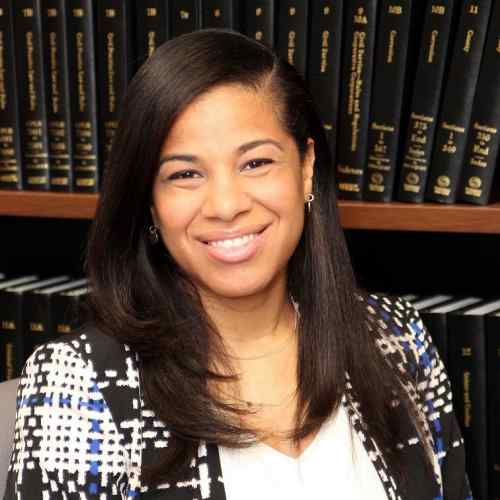
Breitburg, a Senior Scientist at the Smithsonian Environmental Research Center
in Edgewater, Maryland. As a part of the semester long Adaptive Peaks seminar
series, Dr. Brietburg’s lecture, “The Ocean is Losing its Breath,” presented an
overview of ocean deoxygenation, its effects, and its solutions.
As the leader of the Global Ocean
Oxygen Network, Dr. Breitburg has now invested years into researching various
anthropogenic impacts on the marine environment. In the beginning of her talk,
Breitburg was very quick to clarify, “I’m also talking about coastal waters
like estuaries, and also semi-enclosed seas like the Baltic sea, and not just the open ocean.”
Following her introduction, Dr. Breitburg
immediately jumped into her presentation. First, she acknowledged that low
oxygen levels do occur naturally in the ocean, however, the current concern
amongst marine scientists is that oxygen is now declining beyond areas where
these naturally low levels have been traditionally observed.
According to her presentation,
ocean oxygen levels globally have dropped 2%. While to many, a 2% decline in
oxygen does not sound substantial, declining oxygen levels affect organism of
all sizes. Specifically, a lack of oxygen affects an organism’s ability to
respirate, photosynthesize, and reproduce. While marine deoxygenation has many
causes, Dr. Breitburg stated that the primary sources of this global phenomenon
are agriculture, human waste, and the burning of fossil fuels.
When discussing any environmental
problem many people are often left wondering what they can do to make a
difference, especially communities that are inland and like Syracuse, NY,
thousands of miles from the nearest ocean. But, Dr. Brietburg pointed out that
“it is not all gloom and doom” and that there are actions that we can take.
Dr. Brietburg presented many
different pathways for one to make a difference. She pointed out that while we
have developed an incredible understanding of the impact of ocean deoxygenation
on the marine environment, there is currently no thorough research on the
impact of ocean deoxygenation on us. She then explained that, by extending
research on this issue to its impact on human health, we can raise awareness of
the severity of this ocean deoxygenation, and gain the attention of politicians
and other global forces who have the power to influence this problem. Aside
from further research, she recommended changes in various agricultural and
aquaculture systems. Furthermore, she said with a serious tone, “carbon capture
and sequestration need to be added to the equation.”
During her conclusion, Dr Breitburg
stated, “The big challenge is to increase engagement, both with civil society,
and policy makers. And to do that, we need to increase and improve our
communication on these issues.”
While ESF offers a few courses, and
a minor in marine science, it is not often that a marine scientist visits
campus. While ocean deoxygenation is like all environmental issues-
complicated, Dr. Breitburg instilled hope within her audience, and showed that
with further research, communication, and engagement with policy-makers, solutions
to this issue are not as far-fetched as they might seem.
Dr. Breitburg directs SERC’s Marine & Estaurine Ecology Lab and thinks
up new ways to investigate the impacts of dead zones and acidification on
Chesapeake Bay’s fish and invertebrates. Breitburg has also served as
Participating Faculty, Graduate Program in Marine-Estuarine-Environmental
Sciences, University of Maryland System. She was previously Curator,
Marine/Estuarine Ecology, Ichthyology, at The Academy of Natural Sciences,
Estuarine Research Center and Adjunct Professor, and Graduate Faculty member
within other departments at the University of Maryland. She earned
a BS and MA in Biology from Arizona State University, and a Ph.D. from the University
of California, Santa Barbara, where she looked at Marine and estuarine
ecology; relationship between behavior and community ecology; and the behavior
and ecology of fishes.
This chapter in the Adaptive Peaks Speaker Series is cross-listed
with Women in Scientific and Environmental Professions and is sponsored by
Department of Environmental and Forest Biology and ESF Women's Caucus. As part of the requirements for FOR496/497 Perspectives on Career and Gender, students share responsibility for reporting on presentations in the Women in Scientific and Environmental Professions Speaker Series. The preceding was prepared by Lydia Torres, BS 2019, Environmental
Studies, with a concentration in Environment, Communication, and Society and a Minor
in Environmental Writing & Rhetoric.
 ESF's Environmental & Social Justice Lecture Series continues Tuesday, Mar 3, at 11am in ESF's Gateway Center, with "The Environmental Implications of Interstate 81."


