Friday, February 26, 2021

ESF Women making HerStory

In honor of Women's History Month, the ESF Women's Caucus and Office of Inclusion Diversity and Equity would like to acknowledge the many ways that ESF Women (current or past faculty, staff, administrator, alumna, student) are making/made history, or that contribute/contributed to campus, community or beyond!  We hope to share these tributes over the course of the month with the nominees and (with their permission) via social media.  Please nominate ESF Women through this form.

Dr. Malika Carter modeling Mahalia Jersey and holding a deck of 2020 Women's Empowerment Cards
Dr. Carter in draft Jersey & cards.
To thank you for your help in recognizing these amazing individuals, we'll have some drawings later in the month for an Alice Paul Women's Empowerment Draft jersey (1-size 2X) and decks of Women's Empowerment Cards (5) created by the talented students of Art Force 5, and donated by the OIDE.  Each nomination can be entered to win.  

For more information about the ESF Women's Caucus, visit https://www.esf.edu/womenscaucus, and to learn more about initiatives launching through the Office of Inclusion, Diversity and Equity, visit https://www.esf.edu/IDE.

This Alice Paul 19th Amendment Women's Empowerment
Draft Jersey can be yours!


Thursday, January 28, 2021

Pronouns: why include in your biography and email signature block

Thank you for asking about why we are including our pronouns!  In short, because It helps many. 

I am guessing you prefer your full first name rather than a shortened version thereof?   That is how you have identified yourself in your signature block. You don’t have another line listed with the common short version, or any other way to refer to you in your text.  As a result, I feel pretty safe calling you that—even though you might sometimes go by the short form or a middle name with family or friends, or maybe your surname with teammates.

Normalizing conversations about pronouns makes it easier for folks for whom common prounouns don’t apply to share how they identify. Unfortunately, it remains unsafe in far too many places for some to be their true and authentic selves-not just in the LGBTQIA+ community, but heterosexual cisgender men shamed for being “emotional” or doing something “like a girl” or presuming cishet women don't have the  same skills and experience as their stereotypical male classmates or coworkers.  

Among all the places this needs to change, higher ed should top that list. Students and employees  commit to study, work and live (in case of dorm residents and those in labs and studios all hours of day and night) should not require bravery just to be.  My sharing my pronouns demonstrates that I hope the students and colleagues with whom I work trust me to do the same with me and in our community.  Plus, if folks are comfortable sharing, others are alleviated from guessing.   This sometimes seems to be a burden for folks, but calling people as they identify (full first name?  Short version?  prefer middle name?  Correctly pronounced?) adds to a respectful climate all around. 

In addition, higher ed is international.  Even if you are fortunate to have a name that faithfully represents your gender identity, that name can be unfamiliar to those from other parts of the world.

In addition to adding personal pronouns, some folks are also including "why” to enable those that are unfamiliar with that practice to learn more about it, by linking to GLSEN PronounGuide  or My pronouns, what and why

Some other good resources:

o   What are pronouns?  How do you ask someone’s pronouns? And other video clips:  https://pronounsday.org/resources

o   What to do if you or someone else accidentally uses the wrong pronoun: https://www.mypronouns.org/mistakes

o   Practice using various pronouns: https://pronouns.minus18.org.au/

Monday, January 25, 2021

ESF’s bathroom signage and menstrual product initiatives shared at SUNY Spectrum conference

You saved my life: Restroom Stories of Safety and Survival - Messaging, Hygiene Products & Prophylactics” was recorded during the 3rd annual SUNY SPECTRUM Conference, August 26, 2020.  Staff at ESF (Sue Fassler, Jules Findlay, and Heather Engelman), SUNY Upstate (Cristina Pope and Mattie Cerio), or both (Dr. Malika Carter) discussed menstrual product distribution, signage in bathrooms, and single stall and ADA accessible restrooms, as well as the lactation rooms on both campus—and normalizing the conversations about all these things. Upstate staff shared information about wudu stations, their distribution of complimentary prophylactic products, and how all of these impact their clinical Health Equity Index rating while ESF folks spoke about the unique challenges of field work.  The presentation shares some data and photos compiled by members of the ESFWomen listserv, as well as work that moved forward because they kept asking questions. 


One of the most important commitments we can make in supporting a culture of belonging on our campuses is to provide safe restrooms. Join us as we share our successes and failures with leadership buy-in, messaging, restroom renovations, signage, and complimentary hygiene and prophylactic products.

Learning Objectives:

  • Practical knowledge of project planning steps in creating ALL Gender restrooms
  • Practical knowledge on communicating and celebrating successes
  • Learn how to implement a complimentary hygiene product service
  • Learn how to implement a complimentary prophylactic service

Convener:

  • Karren Bee-Donohoe  (She, Her, Hers), Associate Vice Chancellor, SUNY Office for Capital Facilities

Speakers:

  • Malika Carter (She, Her, Hers), Chief Diversity Officer, Environmental Science and Forestry and Interim Chief Diversity Officer, Upstate Medical University
  • Mattie Cerio (She, Her, Hers), Medical Social Worker & LGBT Program Manager, Upstate Medical University
  • Heather Engelman (She, Her, Hers), Instructional Support Technician, Environmental Science and Forestry
  • Sue Fassler (She, Her, Hers), Sustainable Facilities Manager, SUNY ESF 
  • Jules Findlay, Coordinator of Education Abroad, SUNY College of Environmental Science and Forestry
  • Rebecca Hoda-Kearse (She, Her, Hers), Title IX / Affirmative Action Officer, College of Environmental Science and Forestry
  • Cristina Pope (She, Her, Hers), Director, Health Sciences Library Upstate Medical University
  • Carl A. Thomas Jr (He, Him, His), Interim Affirmative Action Officer & Supplier Diversity Coordinator, SUNY Upstate Medical University 


Wednesday, August 26, 2020

Support Participation and Advancement of Women in STEMM

On Women's Equality Day (today), National Academies reminds academia to  “continue to drive bias, discrimination, and harassment out of our institutions and society. Despite decades of research, funding, and programs dedicated to increasing the representation of women in science, engineering, technology, mathematics, and medicine, the numbers, particularly in leadership roles, have remained low or stagnant in many fields, especially among women of color. Our [free, downloadable] reports explore the wide range of structural, cultural, and institutional patterns of bias, discrimination, and inequity that affect women, and the steps that can be taken to increase representation in STEMM.”  Historically, these materials are promoted most heavily to marginalized groups.  However, those impacted most negatively by marginalization cannot fix the bias, or the culture that penalizes them for asking, by themselves.   

We all have a role in creating, and maintaining an inclusive, equitable work and learning environment.  Our students learn not only from course content, but by the examples set by faculty, staff and administration in their classroom and team management, policies, and mentorship models.  NAP titles include:  Promising Practices for Addressing the Underrepresentation of Women in Science, Engineering, and Medicine: Opening Doors (2020); Seeking Solutions: Maximizing American Talent by Advancing Women of Color in Academia: Summary of a Conference (2013); Sexual Harassment of Women: Climate, Culture, and Consequences in Academic Sciences, Engineering, and Medicine (2018), The Science of Effective Mentorship in STEMM (2019), and Beyond Bias and Barriers: Fulfilling the Potential of Women in Academic Science and Engineering (2007).  These, and other reports and proceedings under heading of “women and minoritites”, are available to read online or download here.  Some titles are also available for purchase in ebook or print editions.

Some strategies suggested in these reports include:

  • Networking and group mentoring for those in marginalized groups.  The ESF Women’s Caucus will be continuing its networking coffee breaks virtually this fall.  Please let us know your availability and a little bit about you  at  https://forms.gle/2xEqkXLSjzsDbPKx7  Also stay tuned for information from the IDE Committee/OIDE about affinity groups for students, and those newly forming for faculty and staff.
  • Recognize that balancing work and family is a universal challenge, with potential impact on retention, equity and quality of work life.  The ESF Women’s Caucus, therefore, invites all caretakers (of children, parents, friends) to subscribe to FamilyResources to share resources, family friendly events on or off campus, or to request information from other list members.  To subscribe, email: listserv@listserv.syr.edu and leave the subject line blank, and message of:  SUBSCRIBE familyresources FirstName LastName.

In addition, the Association of American Medical Colleges Gender Equity Lab (GEL)  also invites registration for its upcoming webinar, Community Call: Creative Strategies to Address the Gendered Impact of COVID-19, September 3, 2020
3-4pm ET,
With so many personal and professional changes to our lives as a result of the pandemic, more attention must be paid to how these changes disproportionately impact women, especially women of diverse backgrounds. During this community call, hosted by GWIMS, discuss with your colleagues creative solutions to the gendered impact of COVID such as caregiving and dependent care issues, working remotely, virtual practices and other topics – this call is open to all. [GEL] recently launched … to assist members with these emerging issues and more calls can be scheduled to meet the needs of the community and share resources. REGISTER.   Submit your questions and resources to discuss on the call.  Questions? Contact Rebekah Corlew or Diana Lautenberger

Thursday, August 13, 2020

Mentoring networks resume this fall

Semesterly reminder that short breaks help individuals regroup and gain fresh perspectives, that women benefit Networking and group mentoring as their stress responses moderated by social supports.  Stresses will remain high while there are so many unknowns, so let us know when you could be available (about monthly) to meet virtually* and a little about you so we might group participants at  https://forms.gle/2xEqkXLSjzsDbPKx7  Also, if specific cohorts are already meeting on their own, or would be interested in doing so under a larger umbrella, let’s talk!

* I asked prior to last semester for thoughts about virtual meetings.  The general consensus was “no”, that conversation might be inhibited or people might find it distracting.  However, campus closures necessitated an unplanned experiment with this format.  Participation did drop for most coffee breaks, but there was a lunch cohort that continued to meet every few weeks.  This was invaluable for sharing information across offices, and strategies from working from home, in spaces that hadn't been planned for that.  The were welcome brief respites with friendly folks rather than crabby colleagues (some of whom may, or may not, be kids or partners also plunged into work/school-from-home 😊 situations).  Since many will continue working from home due to continued need to reduce density on campus/lack of physical meeting spaces, and some folks haven’t yet been relocated for planned renovation or surprise ventilation issues, coupled perhaps with child- and elder-support issues, we’ll be continuing remotely for the foreseeable future. 


Tuesday, May 12, 2020

Re-usable menstrual products

ESF has received a $5,000 award to further look holistically at the campus' materials ecosystem and to build a zero-waste campus infrastructure that effectively addresses accessibility, equity, and systemic oppression from the New York State Association for Reduction, Reuse and Recycling (NYSAR3) and the New York State Pollution Prevention Institute (NYSP21). 

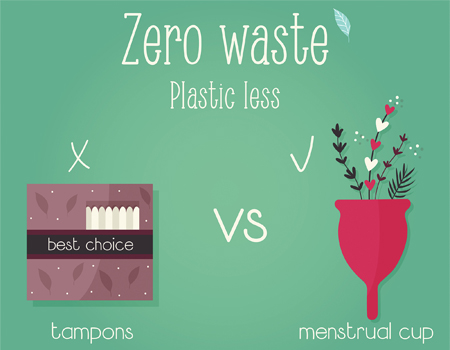
With the grant, ESF will purchase menstrual cups and materials for reusable pads. This effort will build upon the College's zero-waste and inclusivity goals and move closer to becoming a zero-waste campus by 2025. ESF launched its campus-wide composting program in August 2019 and has seen a 27 percent decrease in trash (by weight) since that time.

Lack of access to menstrual products (AKA "Period Poverty") also negatively impacts quality of life for far too many individuals.  Such supplies are in constant demand at food pantries and other social support structures.  This can prevent full participation in school and field work; menstrual cups in particular can  Thus the Office of Inclusion, Diversity, and Equity has also pledged funds, and the Baobab Society has pledged their supplies of menstrual cups that the had purchased for a tabling event for Womyn's Herstory Month, as well as assistance in tabling.  As a cost saving measure, PIs budgeted funds for fabric, rather than cloth pads, and hope to recruit student groups and volunteers to make pads, and to teach others to do the same.

Read the press release from The Office of Communications & Marketing here.

Monday, April 20, 2020

Kids Day 2020--virtually-all year!

While we wait on opportunities to bring our selves (and our Kids) safely back to campus, we invite the community to bring ESF principles into their homes with activities created by ESF's #WORKPLACESUPERSTARS--students, employees, alumni, and our collaborators near and far.   Please visit https://www.facebook.com/ESFKidsDay

While we miss seeing your shining faces in person this April 23, we are pleased to have a forum to share opportunities that come up between these one-day annual events.

Thursday, April 16, 2020

Meet Sue Fassler, Sustainable Facilities Manager


Sue Fassler, the Sustainable Facilities Manager at the SUNY College of Environmental Science and Forestry, discussed her experiences in the sustainability field on Thursday, April 16, 2020 in a webinar coordinated by ESF Open Academy. 

Ms. Fassler’s first job in the field of sustainability took her down to Hallandale Beach in south Florida, where she became the Green Initiatives Coordinator for the city. She was the first sustainability coordinator ever hired by the city. Her role was to create sustainability policies for the city, essentially from scratch, culminating in the creation of the Hallandale Beach Sustainability Action Plan. Ms. Fassler mentions several strategies that became key takeaways from her time spent in southern Florida.

She talked about taking the tedious and hard work for herself in order to give more enjoyable and engaging tasks to the rest of the team. She mentioned allowing the team members the freedom to create their own sustainability projects which in turn gave them a sense of project ownership. She also encouraged the inclusion of skeptics on the team and talked about how those who were, at first, most skeptical often became the loudest advocates. Each of these strategies were successfully implemented to increase engagement with and passion for the projects by every member of the team. 

Ms. Fassler went on to discuss her work in Onondaga county as the Save the Rain Project Coordinator. The goal of this project was to reduce combined sewer overflow during large rain events through the use of green infrastructure, such as gardens and plantings. With this example, Ms. Fassler discussed the importance of simplifying sustainability data into visual and compelling stories in order to draw more people in and make sustainability concepts and results more accessible to the general public. Telling stories and giving examples of success stories also makes the project goals feel more achievable. 

After working with the Save the Rain Project, Ms.Fassler applied to become the Sustainable Facilities Manager at SUNY-ESF. When she first saw the job posting for her current position at SUNY-ESF she didn’t think she was ready for the job. Ms. Fassler pushed past her initial hesitation to put together the application, regardless of whether she would actually apply or not, and found, in doing so, that she was in fact highly qualified for the position and the more she thought about it the more she wanted the job.  Throughout the webinar, but especially when discussing her job at ESF, Ms. Fassler encouraged us to challenge our perceived limits. She encouraged us to approach all aspects of a position with equal enthusiasm, even aspects which might not align with our strengths or passions. By pushing ourselves past our perceived strengths, we allow ourselves to grow and succeed -- not only in a singular position but in our careers as a whole. 

Sue Fassler received her B.S. in Environmental Studies from SUNY-ESF. She went on to complete a dual degree masters program where she received an M.S. in Environmental Science from SUNY-ESF and an M.S. in Public Administration from Syracuse University. She is currently the Sustainable Facilities Manager at SUNY-ESF, where she is working to improve campus wide recycling and composting efforts among other projects.  

While currently postponed, keep an eye out for a presentation by Sharon F. Owens, Deputy Major for the City of Syracuse, on local lead paint remediation, and speakers in the Women in Scientific and Environmental Professions Speaker Series.

As part of the requirements in FOR797 Perspectives on Career and Gender, students share the responsibility of reporting on speakers that visit ESF.  The preceding was prepared by Megan Hazlett, a MS student studying Fish and Wildlife Biology and Management in the Department of Environmental and Forest Biology, and Arianna Wills, a MS student studying Ecology and Ecosystems, in the Department of Sustainable Management.

Monday, March 16, 2020

Coffee Break: Virtual Edition

During the standard business week, it gets so busy that we have skipped lunch, opted not to refill water bottle to save that time (and that of the inevitable restroom break)—and we are running out of steam carrying more than our fair shares of mental load and taking care of everyone around us.  The new need for "social distancing" and remote learning for our students and for some of us, for our children, may actually increase the need for contact this semester.  So, put on the brakes, recharge batteries a bit, reconnect, bounce ideas off of one another, and offer and receive advice about handling work and life pressures--from wherever you happen to be.

Unfortunately, with this format, we must ask you to provide your own coffee/tea and snacks, but we can still offer an ear and a (virtual) shoulder.  We have got this, and we have each other's backs!  

We are keeping the same schedule, [Mostly] Third Thursdays (3/26 and 4/16) 3:30-4:30 and First Fridays (4/3, 5/1), 11:40-12:35, but rather than walking across campus:  meet.google.com/sru-kxfo-qt or dial: +1 518-600-1124  PIN: 751998318#

FamilyResources now live!

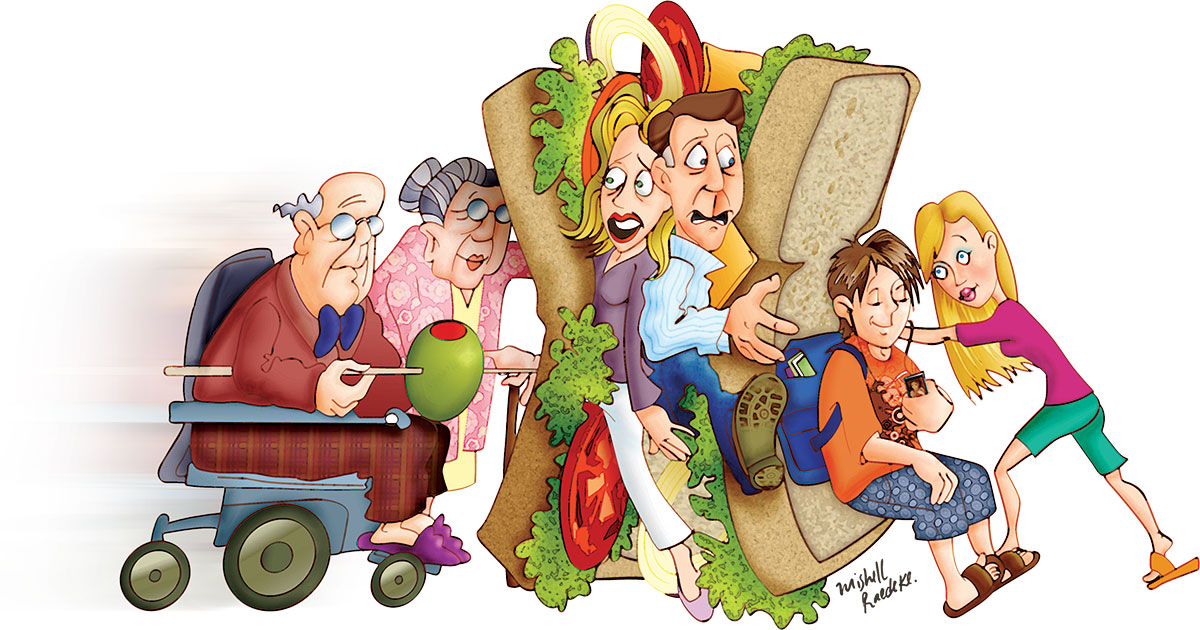
couple envisioned as a sandwich, squashed between parents and children
Childcare and eldercare issues are universal concerns, unbounded by title, gender, sexuality or marital status.   So, after discussion with some others about how better to share resources with employees and students, inclusive of all family structures, and facilitate direct communication among interested parties, we launched:  FamilyResources!  Intended for any parent (or other person caring for, or supporting in any way, any family member, friend, or colleague--past, present, or future) to share resources, family friendly events on or off campus (including online!), and to request or offer advice.

To subscribe, email: listserv@listserv.syr.edu and leave the subject line blank, and message of:  SUBSCRIBE familyresources FirstName LastName
Please note:  this was hatched before the community was plunged into "social distancing" and indefinite landscape-level virtual work and study.  These factors actually increase the need for strong support, so please subscribe and stay connected.

Also, the Women's Caucus is seeking partners interested in co-owning this group.  To discuss, please Heather Engelman, engelman@esf.edu.